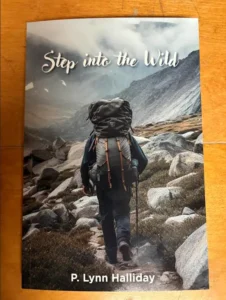
Step into the Wild – story Six – Paddling is Paddling-Right?


Chapter One

Following that one adventure out to the Lighthouse on Lake Superior, we felt pretty confident that we could tackle a trip on our own. We had purchased two single fourteen-foot kayaks and had practiced with them on the Spanish River, beside our house. Camping had been part of our adventures for years so we had all the necessary equipment to plan a short expedition. This year we were decided to go on a trip out to Wilson Island to check out the amazing Sea Arches, that our guide had mentioned the year before. We headed north, directly to Rossport, where we had booked an overnight stay at the Rossport Inn. This Inn provided cute little individual cabins, barely big enough for two, that overlooked the coastline of Rossport. They were located fairly close to the railway, which was still in active use, so we expected and received a cabin shaking experience of the train flying by, whistles blowing. But one absolutely wonderful discovery was the best food ever, offered at the quaint little Inn. We arrived on time for the evening meal and sadly ate so much of the fabulous food, that we left no room for the biggest, thickest blueberry pie we had ever seen. Bob asked them to save him a slice for breakfast, claiming that with that fuel he’d be able to out paddle me all day!


Chapter Two

The next morning, streams of sunshine, burst through the little cabin’s window. Packing our gear, we headed down to the water to begin the laborious job of packing the kayaks. Tedious would be a good description of the process of packing a kayak—so different from a canoe. On a canoe trip, you had big packs and possibly a food barrel that you would stuff all your gear and food into, then would simply toss the packs into the canoe, tie them down and in less than thirty minutes you’d be on the water. Not so with kayaks. All the gear and food had to be put in small dry sacks, including your clothes, tent, and sleeping bags, then all these little sacks had to be stuffed into the hatches of each kayak. It was an exercise of scientific planning to fit everything in.

We divided the sacks between the two kayaks, but found to our dismay that our hatches were simply not big enough to hold all of our gear. Our tent was too long, our sleeping bags too thick, the pots too fat and the cookstove too unbendable to squish into the small hatches. We tried several ways to make it work, but always had leftover gear, when the holds were full. An hour later we sat back on the sand, to take a breather.

“Okay, it doesn’t look like it’s all going to fit,” I said, tossing the tent to the ground.

“Nope, it doesn’t—clearly our canoe trip equipment isn’t suitable for these boats,” said Bob, still holding the pot he’d been trying to squeeze in.

All of our gear was spread on the ground around the kayaks. I got up and sorted the gear into a pile of ‘I can’t live without this, gear’ and ‘I might be able to live without that, gear.’ To my frustration, I noted that the stuff we absolutely needed, were by far the longest, fattest gear—the ones that just wouldn’t fit. I raised my hands to the air, “What are we going to do?” An answer I was not expecting, arrived in a flash.


Chapter Three

I watched in amazement, as the blue sky and sunshine that greeted us that morning, was suddenly replaced by a zagged flash of lightening. In a blink the entire horizon had turned a dark, purple colour, with streaks of bright white light dashing across it. We could literally see the storm rushing our way. That got us moving. Quickly we flipped the kayaks over, grabbed all our scattered gear and dashed for the Inn. Just arriving, as the first splash of rain hit the awning. I stood on the veranda watching in awe, when one of the owners joined me.

“Amazing how fast a storm develops around here,” he said, pushing his hat back.

“Yeh, it was sunny an hour and a half ago. Now, look at it. You can hardly see the lake.” I lifted my eyes in wonder, whispering, “You knew this was coming.”

“Well, when you’ve lived around here as long as I have, you get to know when storms are brewing,” he replied as he shuffled inside, door clapping shut behind him.

Bob, pushed out through the door, to stand beside me. Wonder filled my face. “What’s got you so lit up?” he asked, lifting his eyebrows.

“Oh, I just stand amazed at how well we are protected.”

He turned quizzical eyes towards me.

“If we’d had our way, we would have been halfway across that bay, in open, unprotected water, when this storm hit. Just look at those waves—they must be five-feet high.” I shook my head.

Bob nodded. “Yep, we were frustrated that things didn’t fit, but God was busy protecting us from the storm. Amazing grace.”

Linking arms with Bob, we headed back to our little cabin to play some cribbage while we waited for the flash storm to abate. “Perhaps, we can try a day paddle tomorrow?”

We smiled at each other. We’d go back home tomorrow and return in a year, better prepared.


Step into the Wild – Story Five New Lake – New Boat


New Lake—New Boat

Chapter One

In the winter of 2006, our son Bill decided to go to Lakehead University in Thunder Bay. He’s an outdoor enthusiast like us and wanted to attend a university that gave him access to the great outdoors. We did a little happy dance, because for years we had been wanting to paddle on Lake Superior— the largest freshwater lake in the world by surface area and this would be our opportunity as we took Bill to and from school. Lake Superior is a natural wonder filled with a fascinating history of shipwrecks, plus absolutely the most unique, sometimes terrifying, wind and water conditions.  It stretches across the U.S. and Canada with famously cold, clear waters and stunning coastal landscapes, making it one of the most intriguing lakes in the world. But this lake had to be approached very carefully. Lake Superior’s weather conditions are famously unpredictable, contributing significantly to its hazardous nature. The lake’s vast surface area allows for sudden and severe weather changes, posing a constant threat to those navigating its waters.

I shivered at I researched the lake. Apparently during severe storms waves have reached a height of up to 20 feet or more. But it’s not only the waves that make it dangerous, it also has longshore currents that move parallel to the shore, driven by waves hitting the shore at an angle and rip currents, which are strong, narrow currents, that drive the unwary out to the deep. All in all, it sounded like a pretty challenging prospect. We couldn’t wait to test our paddling skills in this exciting lake. But our investigation did bring one thing to mind— this adventure would require a different type of boat—something able to withstand sudden, gigantic waves at moments notice.


Chapter Two

It was time to switch to kayaks. Kayaks are long, low-profile boats, that can slice through any water conditions, and are close enough to the water to minimize wind affects. In addition, the cockpits can be covered with a skirt, that prevents water from filling the boat. They were the perfect solution for Lake Superior. The only problem was that we didn’t own kayaks and didn’t know how to paddle them—but how hard could it be? Afterall, paddling is paddling—or so I thought. To our delight, that winter the Espanola complex was offering beginner’s kayaking classes. The perfect solution—we signed up right away.

So, there I stood, after work one evening, on the pool deck, paddle in hand, looking at four kayaks bobbing in the pool. The instruction began with teaching us how to get in. I scoffed. “Surely, they can bypass this part—we’re all paddlers,” I mumbled to Bob.

He lifted his eyebrows, shrugging. “Shush, it must be important.”

Crossing my eyes, I turned to watch as the instructor smoothly put her hands on the combing, on each side of the kayak and neatly slid into her seat. Easy Peasy—right? Wrong!

I mimicked her technique, exactly—I thought, but somehow ended up in the water. My kayak remained upright. “Hmmm, how did that happen?” I mumbled, as a red flush surged up my face.

Bob was sitting in his kayak, grinning. “It’s really easy, Lynn.” He whistled a little tune.

I pulled myself out of the water and tried again. A similar result, except this time, I overturned the kayak. Swimming with the kayak to the shallow end, the instructor and I turned it over to mostly empty it. Perhaps paddling isn’t paddling? I never had trouble getting into a canoe.

“Perhaps you can work on your entry, later?” whispered the instructor, as she helped me to get in.

“Ya, I’ll practice.” The snickering stopped, as she moved on with her lesson. “Sure, hope this isn’t a sign, that kayaking is not for me?” I whispered.


Chapter Three

Once I was in the kayak, it wasn’t hard to paddle. With every paddle stroke, I gained confidence. The paddle was two sided, but the strokes were very similar. Before long we were all zooming around the pool, sometimes playing bumper-cars while trying to navigate the small area. I took to it pretty well, I thought, but as time ticked by, I seemed to get slower, and was unable to make the turns that I thought that I had mastered, earlier. I stopped at the edge of the pool for a breather, but pushed off when I saw the instructor coming my way. More attention, I didn’t need. Valiantly, I tried to pick up the speed, but slowly realized a strange phenomenon—I was sinking. Well, okay, I wasn’t exactly sinking, but my kayak and I were definitely lower in the water. In addition, I noticed that there was a distinct sloshing sound when I’d lean into a turn. I took a glance behind me and gasped. “Did you give me a kayak or a submarine?” My stern was totally submerged. It was suspended about six inches below the surface of the pool.

The snickers began, again. “Having trouble?” said Bob, with a sassy grin.

I tried to splash him, but fell out, instead. The sinking stern filled with water, made the kayak very tippy.

“Everyone, gather around,” said the instructor. “This is a good lesson.” She got into the pool with me, to help pull the really, really heavy kayak onto the deck, then reached down and pulled open my stern hatch. “Look, everyone, the hatch is full of water—which is why you sank. This hatch has no inner seal, so when you tipped over earlier it must have started to fill with water, gradually filling up as you paddled.” She grinned at me. “Always check your hatches, before you paddle.”

“Sure, hope this isn’t an omen—I don’t want to be the next Edmund Fitzgerald, on Lake Superior.” Everyone laughed, including me.


Chapter Four

Training was over and we were ready to tackle our first trip on Lake Superior. We had purchased kayaks of our own, but we opted to start with a guided trip. We signed up for a one-day paddle, with an adventure company from Rossport, a small town, nestled into a cove about two hours east of Thunder Bay. After dropping our son off at school, we headed back to Rossport. Our guide lived and worked in the area and was an expert on the quirks of this Great Lake. The plan was to kayak out to the lighthouse on Battle Island, a 9.3 km paddle from the Rossport Marina. This lighthouse was built in 1871, to guide boats through the dangerous rocks and currents of the area. It stood alone, unprotected against the full power of Lake Superior, with it’s unpredictable and relentless storms.

Early in the morning, we arrived at the Marina, where we were fitted with kayaks. Long, sleek seventeen-foot sea kayaks. “Hmm, these are longer than the kayaks that we bought,” I murmured. “I wonder why?” I shrugged, as my eyes roved over the sparkling water, little wavelets dancing on its surface. The lake looked like it went on forever, outlined by a jagged, rocky coastline, a few islands sprinkled randomly, here and there. It was a relatively calm morning, when we headed out, although, I was told that even on a tranquil day, you could feel the constant underswell. As we shoved off from shore, I experienced that deep, underlying swell—it left me with the uneasy feeling that things could change in the blink of an eye.


Chapter Five

We pushed off from shore and quickly fell into a steady paddling rhythm alongside our guide, who pointed out places of interest as we paddled. The kayaks ate up the kilometers as we smoothly glided into the dock at our destination, on time for lunch. We gathered our packs and started out along the winding path that led to the lighthouse. The path was like no other—moss covered the ground and the trees. Every branch had long beards of moss, dangling from it. It felt like we were walking through some fairy tale—so surreal. Along the way we passed an old truck, hidden beneath the undergrowth, like it was being reclaimed by nature. We trekked along this trail until we reached the gigantic rock outcrop, where the lighthouse towered over us.

You had to look way up to see the great light, that was blinking, despite the daylight. We were told by our guide that the night that the Edmund Fitzgerald sunk, the waves were high enough to smash the light in the lighthouse. I looked up in awe—it was fifty feet from water level to the top. Then my eyes scanned the calm water. I shivered—what if?

We sat by the shore for a while, enjoying a view that could take your breath away, but calm waters on Lake Superior are not to be wasted, so our guide directed us back to the kayaks. It was late afternoon—I was surprised that the lake was much more active than before. Small waves had started to form and the underswell had grown noticeably. Time to head back to Rossport, before wind and waves made it impossible. We headed back. Chased by ever growing waves, we made it back to shore, safely. Our first trip—a success. We left there the next day, wondering what adventures lay ahead.



Step into the Wild- Story Four – Not all who wander – South Carolina


Not all who wander—in South Carolina


Chapter One

In the last adventure that I shared, I quoted J.R.R. Tolkiens who said, “Not all who wander are lost.” Despite the difficulties of finding my way on my own farm, I still held fast to this mantra. I do, however have to admit, that occasionally my wandering ways get me into some uncomfortable situations, one of which, I’m going to share with you, now. (Sadly—there have been many lost adventures to choose from).

It has long been my habit to arise early in the morning, generally before first light and venture out for a hike, snow shoe or walk, depending on the time of the year. This is my thinking / praying time and I rarely miss it, no matter where I am.

On this occasion Bob and I were down in South Carolina visiting some friends. It was Sunday morning and we planned to get up early and go to one of the local churches for a time of southern fellowship. As usual, I awoke early and not wanting to disturb anyone, I decided to sneak out for a little walk. So, I quickly got dressed in some old grubby clothes, tossed on my tennis shoes and tip toed out the door. I was only going around the block so I didn’t prepare as I might have done for a proper outing. I didn’t wash my face and comb my curly mop into respectable order or brush my teeth. I didn’t take my phone, I didn’t leave a note, I didn’t dress for company, I didn’t wear a watch, I didn’t take along any ID or money and lastly, I didn’t really check the address of the house we were staying at. But what did it matter—this was just a short, casual prayer walk—no big adventure. Gosh, the sun was barely up—I wasn’t going to meet any people?


Chapter Two

Off I went. I am very aware of my propensity for getting lost, so I was determined that it would not happen on this trek. As I stepped out of the door, I looked very closely at the house to the right and noted that there was no house—just a field on the left. Across the street was a plain two-story house, with brown shutters. Peering down the road, it seemed that the best way to go was right, so I headed that way. This cul-de-sac had fairly upscale houses, on decent sized lots with cultivated flower beds and paved driveways. Before very long, I reached a dead-end and had to turn around. Within fifteen minutes I was back at my starting place.

“Harumph,” that walk was much too short—I usually walked for an hour. Looking to the left, I decided that it would be equally safe to go that way, so I headed off. This time, the view was different. Gone were the prissy houses on nice lots—instead there were fields, barns, trailers and flags, everywhere. Every fallen down porch had a flag and at least one goat on it.

“What a strange place this is,” I thought. “On one side of the side road, you had mansions and riches and on the other, homesteads and goats—plus flags.”

It wasn’t long before this road also dead-ended, so I turned around, again. The sun still hadn’t shown its shining face—lots of time left. There was another side road up ahead and I figured that I would head down this country road, then take the first cutoff to the right, then venture along that road to the first cutoff to the right, and lastly venture along that road to the first cutoff to the right and I would be back where I started because that was a square! The theory was very sound, but unfortunately the execution was a bit flawed.


Chapter Three

I walked for a long time. I knew this, despite not having a watch with me, because the sun was up now and shining brightly, announcing a bold new day. I lifted my eyebrows. My square theory just wasn’t coming to an end, as I expected. Weariness alerted me that I’d travelled farther than planned. I carried on, since I just knew that the house would be in sight just around the next bend. I had an uneasy feeling that I was running out of time, so I decided to run for awhile.  I have no idea of how long I ran, but I was coated in sweat and there was still no house in sight when I finally gave up—exhausted. Concern flickered across my mind—was I lost? I took inventory of my present situation—hmmm, grubby, unkempt, sweaty appearance, no ID, no money, no idea of where I was, and no real idea of the address or phone number of my friends. Did that spell trouble—was I LOST?


Chapter Four

What were my options? Pray—well I’d been doing that for the last hour, but clearly this was one of those times in my life, when the Lord was teaching me something, since He didn’t teleport me back to bed—presuming this was just a bad dream.

“Okay, you’re an adult. Don’t panic—think,” I mumbled. Clearly, I needed to pop into a corner store and ask directions or ask to use the phone. Simple, except, there were no stores in sight, and looking down, I remembered my dishevelled appearance. Grubby sweat pants and my hair was a frizzy mess, like a Phyllis Diller hairdo. Certainly not fit for company. I further observed that the houses within sight were either large mansions with closed gates or old tar paper, shanty houses flying Confederate flags with goats on their porches. I was too grubby to go to the nice houses and too afraid to go to the other, so I kept walking, keeping my eyes open for a health club or golf course or some sort of community building, where I could ask for directions without too much of an explanation or loss of life!

After quite a while I spotted what I thought was a health club straight up ahead. I jogged up the long, winding driveway. When I arrived at the front entrance the sign told me that I had been mistaken, that this place was in fact a home for the elderly. I shrugged—beggars can’t be choosers and I was prepared to beg. Feeling somewhat confident since it was an institution, I creaked open the door.


Chapter Five

I went inside and casually walked down the hall, smiling and nodding greetings to the residents, who were all lined up along the walls like a reception line at a wedding. When I arrived at the front desk the receptionist scanned my appearance, in silence.

“Harrumph,” I cleared my throat, then pasted a sunny smile on my face. “Would you kindly give me directions to Wildwood Point Road?” A glassy stare greeted my request. “It’s in Seneca—it can’t be that far—I just got a bit off course on my walk, this morning.” This time, she glowered, ducking her head to continue work. I was stunned. Didn’t she speak English? I stood at the desk, nervously shifting from foot to foot. After a minute, I tapped politely on the desk. “Pardon me, I’m terribly sorry to disturb you, but I need help.”

She rolled her eyes and sighed. “It ain’t around here—never heard of it.” Again, she went back to her work. Admittedly, I did look a mess, but surely, I didn’t deserve the treatment, I was receiving? All the residents were staring at me, too. With my grey hair standing in a frizzy mess, I wondered if they thought that I belonged amongst the group along the wall? Good grief, did I look that bad? With a grim look and firm voice, I asked, “May I at least borrow a phone, so I may call my friends?”

She rose and grimly assessed me, then turned and walked away. As she left, she said, “I’ll have to get a nurse.”

“Oh my, the phone must be a forbidden request,” I thought. Would she be returning with orderlies to restrain a lost Canadian? Perhaps I should leave? I half turned to go, when a large, imposing matron arrived.


Chapter Six

The nurse finally arrived and to the same question she replied “No, never heard of it.”

“Really? But it must be close, I walked from there this morning.”

“What county is it in,” she asked.

Good grief—did I walk right out of the county they lived in? I knew I felt tired. “The address is in Seneca—is that in this county? I’m visiting friends, but am from Canada, so I can’t give you any more details.” Shrugging, I pleaded with my eyes for a little understanding.

She assessed me for a moment, then said, “I’m not from around here, either. Sorry, I don’t know where that is.” Turning, she started to walk away.

I leaned forward, calling out, “Perhaps, I could borrow a telephone book, so I can look them up?”

Slowly, she turned back to me, hand fingering her chin. “Oh, bother, I’ll get the supervisor—you wait right here.” Her steely eyes glared at me, before she left the room.

Why did this require a supervisor?  I didn’t ask for a meal, or money and I hadn’t even asked to use the phone yet. I pasted my smile back in place and waited while this new person was fetched. When she arrived, she sternly told me that they don’t give out phone books! “I’m sorry, you must have misunderstood me, I just wanted to borrow the phone book to look up telephone number to call my friends.”

“Oh, we can’t do that,” she replied.

Surprised, I told my circumstances again. Surely this explanation would get me some help? Finally, after what seemed like a long time, she made the tough decision to make the phone call for me. I gave her the name of my friends. She scanned the phone book for their number and dialed. She wouldn’t let me have the phone—afraid, I guess that a desperate character like myself would run off with it, cord and all.


Chapter Seven

I could hear the phone ringing and a wave of relief fluttered over me.

After a moment she said, “it’s busy,” then hung up the phone and walked away.

“Can you try just one more time, please?” I called after her.

With a dramatic sigh, she agreed to try one last time. It rang this time—hurray. A smile lit my face as I anticipated the conversation.

The phone kept on ringing. Shrugging, she said, “Not home,” and began to hang up.

“Please leave a message—say, your friend Lynn is here and give your address?”

Raising her eyebrows, she spoke the words. “Now, if you’ll excuse me, I have work to do.”

Thanking her, I walked quickly out of the facility—afraid that they really were going to keep me there. As I pushed open the door, I shuddered, then flopped into a rocking chair on the verandah. “Good grief, what an ordeal that was.” I slowly rocked, back and forth, trying to calm down—hoping that my friend Beth, got the message. Half an hour later, as I was just nodding off, my husband, Bob and our friend, John arrived. They exited the SUV and both stood, hands on hips, staring at me. I got up with a quizzical look on my face and walked over.

“We’ve been searching for you over an hour,” said Bob.

“But we never thought that you were out looking for a new residence,” quipped John, with a grin.

My face started to flush. “It was the only place I could find a phone.” I shuffled my feet.

“Why did you come so far away?” added Bob, nudging John.

“Okay, what’s the big deal. I simply went for a walk, it can’t really be that far from your home, John?”

“Well, I suppose if you were a gazelle—this place is ten miles from my house. In the next county.” replied John, eyebrows raised.

Bob nudged John and they grinned. “Also, we couldn’t help by notice how well you fit in—here at this home for the elderly. That rocking chair fits you, perfectly.”

“And if you stay in it, then you can’t get lost,” added John. Belly laughs filled the air.

With a crimson face, I got into the vehicle. Glad to be saved—if not quite so happy about the teasing. I knew, I was going to be mocked forever for my wandering ways. I shook my head—never again. Then grinned—well, maybe.

Follow me & join the adventure. Sign up today to download your free copy of


    introducing you to Jantastic—the quirky hero of Disaster! Around the Bend